Home / Articles
Managing Diabetes-Related Vision Loss with Stem Cell Therapy
Home / Articles
Managing Diabetes-Related Vision Loss with Stem Cell Therapy
Diabetic eye disease – especially Diabetic Retinopathy and related complications – remains one of the foremost causes of vision impairment in adults worldwide. In many patients with long‑standing diabetes, chronic high blood sugar damages the tiny blood vessels in the retina, leading to fluid leakage, bleeding, ischemia (lack of oxygen), blood‑retina barrier breakdown, and eventually vision loss. Traditional treatments can slow this process, but they rarely restore lost vision or regenerate damaged tissue.
At Dekabi Stem Cell Clinic in Seoul’s Gangnam District, we believe there is a brighter future for patients facing diabetes‑related vision loss. Under the leadership of Dr. Eun Young Baek – founder and Chief Medical Officer, with more than 34 years’ experience in medicine and over 22 years in stem‑cell and regenerative therapy – our clinic offers advanced, personalized regenerative treatments aimed at not just halting but reversing damage to the retina and ocular tissues.
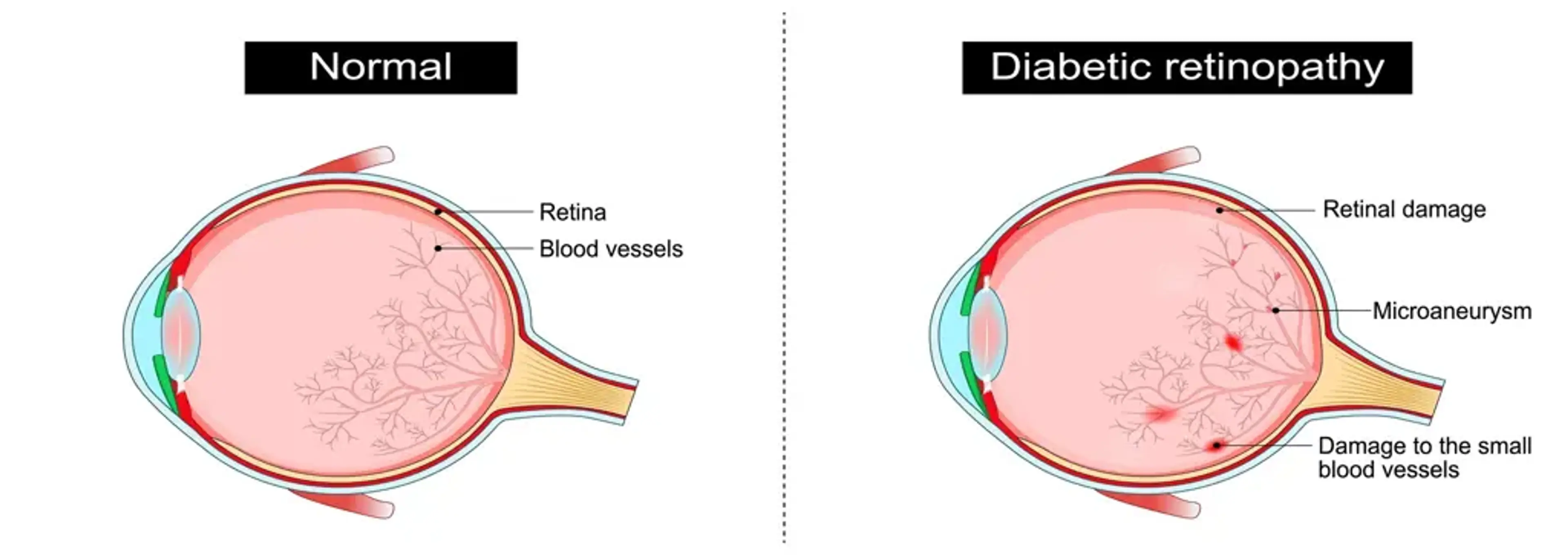
When a person has diabetes, elevated glucose levels over time set off a cascade of harmful changes in the retina:
Loss of pericytes (supporting cells around small blood vessels), thickening of basement membranes, microaneurysm formation, capillary leakage and occlusion.
Neuronal damage: retinal ganglion cells, photoreceptors, Müller glia and other neural elements undergo stress and apoptosis (cell death).
Chronic inflammation, oxidative stress, abnormal new blood vessel growth (neovascularization) in advanced stages.
Clinically this progresses from mild non‑proliferative disease to more severe proliferative retinopathy and/or diabetic macular oedema – both of which can lead to irreversible vision loss unless addressed.
At the heart of regenerative medicine is the idea of repairing, replacing, or revitalizing damaged tissue rather than simply halting ongoing damage. For diabetic‑related vision loss this means:
For example, research has shown that mesenchymal stromal/stem cells (MSCs) derived from bone‑marrow or adipose tissue have beneficial effects in experimental diabetic retinopathy: reducing apoptosis of retinal neurons, improving vascular integrity, and modulating inflammation. Another study in a rat model found that intravitreal injection of retinal progenitor cells improved electrophysiologic responses, contrast sensitivity and preserved retinal morphology.
Here’s why Dekabi stands out as a top choice:
Dr. Eun Young Baek has over 34 years of medical experience, and over 22 years dedicated to stem cell therapy and regenerative medicine. Her background spans plastic surgery, chronic disease management, anti‑aging, and energy/functional medicine.
The clinic has established a reputation for being a leader in regenerative medicine in Korea, particularly in stem cell therapy.
Every patient receives a 1:1 personalised plan combining stem cell therapy, energy surgery/functional neurosurgery, holistic anti‑aging care, detoxification and wellness support. This is critical in vision loss—regeneration is optimized when the whole body is supported.
Dekabi offers minimally invasive interventions, targeted cellular therapies, and follow‑up regenerative programs designed for long‑term health and well‑being, rather than short‑term fixes.
Located in Gangnam, Seoul, the clinic caters to both Korean and English‑speaking patients, making it accessible for international guests seeking cutting‑edge treatments.
In short: if you are facing diabetic‑related vision loss and are motivated for a regenerative path, Dekabi provides a compelling combination of expertise, technology, individualized care, and supportive environment.
Here’s a hypothetical breakdown of how a patient journey might unfold at Dekabi when managing diabetic‑related vision impairment:
Comprehensive ophthalmology evaluation: retinal imaging (OCT, fluorescein angiography), visual acuity tests, electrophysiology if indicated.
Systemic evaluation: metabolic profile (blood glucose, HbA1c, lipids), kidney/liver function, inflammation markers, oxidative stress, nutritional status.
Personalized consultation with Dr Baek to design the regenerative plan.
Choice of stem/progenitor cell type: depending on your condition we may use mesenchymal stem cells (e.g., from adipose or bone‑marrow), or retinal progenitor/vascular progenitor types. Research shows that MSCs and CD34+ progenitor cells both have potential in diabetic retinopathy.
Delivery method: The cells may be delivered intravitreally (into the eye) or periocular/intravenous depending on the goal (vascular vs neural vs support).
Supportive therapies: Anti‑oxidant and anti‑inflammatory modules, detox protocols, metabolic/energy optimisation, ocular support (nutraceuticals, lifestyle guidance).
Rehabilitation plan: Visual rehabilitation, follow‑up imaging, nutrition/lifestyle coaching to maintain the gain.
On the treatment day, stem cell delivery occurs under sterile, controlled conditions.
Post‑treatment monitoring in the clinic for immediate responses.
Short‑term follow‑up over several days/weeks to monitor ocular and systemic response, potential side effects, ensure stability.
Periodic retinal imaging (monthly or quarterly) to assess anatomical changes, vascular repair, retinal layer integrity.
Functional vision assessments (acuity, contrast sensitivity, patient’s subjective vision).
Adjustment of the systemic regenerative programme: ongoing metabolic control (critical in diabetes), lifestyle and nutrition optimization.
If required, repeat or booster stem‑cell sessions may be scheduled depending on progress and specific retinal repair needed.
Improvement in microvascular health of the retina, reduced leakage or hemorrhage.
Stabilization of vision and in some cases measurable improvement in acuity or contrast sensitivity.
Enhanced retinal neural survival and less progression of vision loss.
Improved overall ocular health and potentially reduction in reliance on more invasive treatments (e.g., laser, repeated anti‑VEGF injections).
Results vary depending on the stage of disease. Patients with early to moderate retinopathy tend to have better regenerative potential compared to those with advanced scar tissue, extensive neovascularization or irreversible retinal damage.
Success depends heavily on systemic control of diabetes: good glucose control, blood pressure, lipids, renal health all matter. Without these, regenerative gains may be compromised.
Ongoing commitment is required: lifestyle, nutrition, follow‑up, and possibly repeat treatments.
Renewed hope: the possibility to not only halt further vision decline, but to regain vision, clarity, contrast, and quality of life.
Personalized care: not a “one‑size‑fits‑all” approach; at Dekabi we tailor the therapy to you – your retina’s status, your systemic health, your goals.
Minimally invasive options: many people fear big surgery. Regenerative therapies at Dekabi focus on less invasive methods with quicker recovery and fewer side‑effects compared to traditional ocular surgery in advanced cases.
If you’re ready to explore regenerative therapy for diabetes‑related vision loss, here’s how to begin the journey:
Vision is precious—especially when diabetes threatens it. At Dekabi Stem Cell Clinic, our mission is to combine cutting‑edge regenerative medicine, personalised care, and holistic wellness to offer a new horizon for those coping with diabetic‑related vision loss. With Dr Baek’s deep expertise and our patient‑centred approach, we aim to make regeneration, not just preservation, the goal.